
From our family farm in Hilliard, Florida
Are my eggs still good?
Found a carton in the back of the fridge and not sure about it? Here's how to check, using what USDA and FDA actually say.
The short version
Raw eggs in the shell keep 3 to 5 weeks in a fridge at 40°F or below. Not sure about one? Crack it into a separate bowl. If it smells off or looks wrong, toss it. If it looks and smells normal, cook it until the yolk and white are firm.
How long they keep
How long do eggs last in the fridge?
3 to 5 weeks
USDA's storage chart gives raw eggs in the shell 3 to 5 weeks in a fridge at 40°F or below.
3 weeks for best quality
FDA is a little more cautious and says to use them within 3 weeks for best quality.
1 week
Hard-boiled eggs are different. They keep about a week, shell on or off.
Don't freeze in the shell
To freeze eggs, beat the yolks and whites together first.
The chart doesn't say exactly when that 3 to 5 week clock starts, so to play it safe with our eggs, count from the pack date on the carton.
SinksNot much air inside yet. It doesn't prove the egg is young.
FloatsAn older egg. Crack it and check.
The float test
Does the float test work?
Sort of. As an egg ages, the air pocket inside it grows, and once it's big enough the egg floats. So a floater is an old egg, but USDA says it may still be perfectly safe to use. Crack it and check before you decide.
A sinker isn't a free pass either. When America's Test Kitchen tried the float test, their eggs didn't float until they were 4 to 6 months old. Use the bowl of water as a rough age clue, not a yes or no.
Crack and check
Crack it into a separate bowl and look
Tap a card to see why.
Why a separate bowl? One bad egg won't ruin the rest of your batter.
What you can't see
What smell and looks can't tell you
Salmonella is the germ people worry about with eggs, and it doesn't give itself away. USDA notes that even clean, unbroken, fresh eggs may contain it, and FDA has said eggs carrying it look, smell and taste normal. That's true of eggs from any farm, ours included.
The fix is simple:
Cook eggs until the yolk and white are both firm.
Cook egg dishes to 160°F.
Making something with raw or runny eggs? Use pasteurized eggs.
Keeping them fresh
How to keep eggs fresh longer
40°F or below
Keep your fridge at 40°F or below. A cheap fridge thermometer will tell you.
Carton, on a shelf
Leave them in the carton on a shelf, not in the door.
2 hours, tops
Don't leave them out more than 2 hours. A cold egg left out can sweat, and that helps bacteria get inside.
No need to wash
Washing at home can pull water in through the shell. Ours are already washed and sanitized here on the farm.
Cracked? Toss it
Throw out any eggs with cracked shells.
Bring a cooler
Driving home in Florida heat? Bring a cooler and get them in the fridge first thing.
Quick chart
Quick reference
| Egg | Fridge | Freezer |
|---|---|---|
| Raw eggs in shell | 3 to 5 weeks | Don't freeze in the shell |
| Raw whites and yolks | 2 to 4 days | 12 months. Yolks don't freeze well. |
| Hard-boiled | 1 week | Don't freeze |
| Egg casseroles | 3 to 4 days after baking | 2 to 3 months after baking |
Fridge at 40°F or below, freezer at 0°F or below. From FoodSafety.gov's Cold Food Storage Chart.
Want eggs you know the age of?
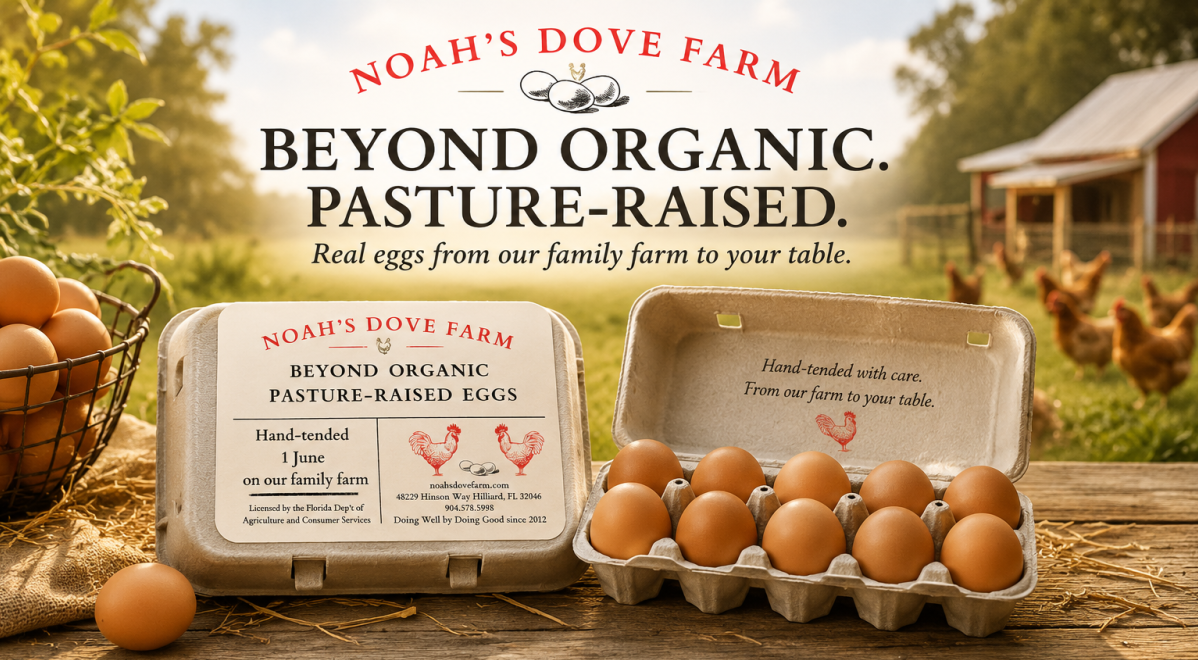
Our Beyond Organic, pasture-raised eggs usually reach your kitchen about a week after our hens lay them, and every carton has a pack date.
Sources
- FoodSafety.gov: Cold Food Storage Chart
- FoodSafety.gov: Salmonella and Eggs
- USDA Food Safety and Inspection Service: Shell Eggs from Farm to Table
- FDA: What You Need to Know About Egg Safety
- FDA Commissioner, 2010: What You Need to Know About the Egg Recall
- America's Test Kitchen: How Long Do Eggs Last?